
By some strange coincidence, your summer plans have led you to the beautiful shores of Newport, Rhode Island, a place renowned for its picturesque coastline and, unbeknownst to many, its intriguing shark population.
You're probably thinking, 'Sharks? In Newport?' Yes, it's more common than you'd imagine, and the tales surrounding these marine creatures are as murky as the ocean depths.
As we swim through the swirling currents of facts and fictions, you'll discover the reasons behind this unexpected shark presence and how it affects you.
But be warned, once you dip your toes into this ocean of knowledge, there's no turning back.
Key Takeaways
- Sharks play a crucial role in maintaining marine ecosystems and preserving the delicate balance of species.
- Not all sharks are dangerous to humans; only a small percentage pose a risk.
- Climate change is impacting shark populations in Newport, affecting migration patterns, breeding cycles, and food availability.
- Understanding shark behavior and promoting conservation efforts can lead to a harmonious coexistence and a more balanced marine ecosystem.
The Shark Species of Newport
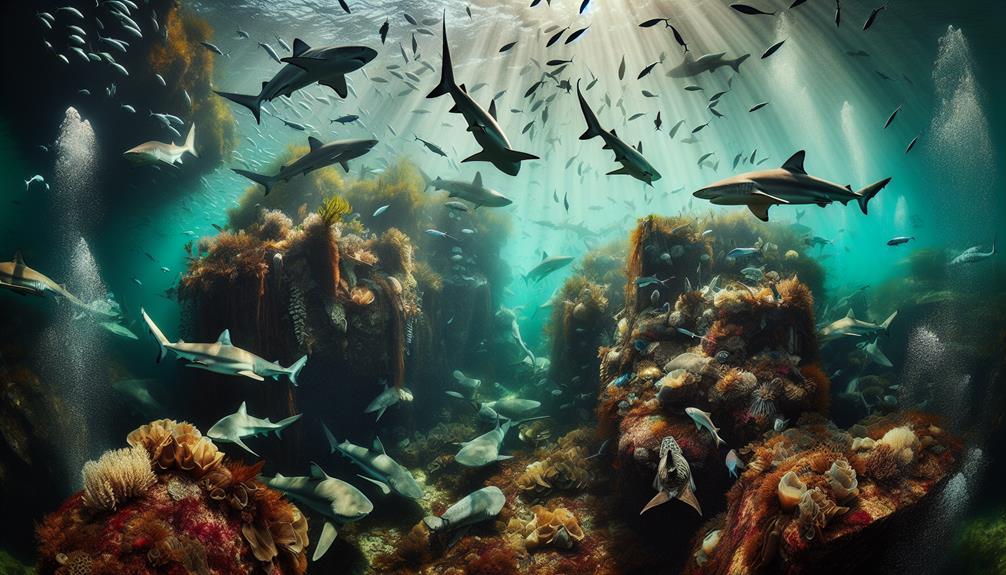
Diving into the diverse world of Newport's marine life, you'll encounter several species of sharks, each with unique characteristics and behaviors that contribute to the ecosystem's balance. These sharks, ranging from the predatory Great White to the gentler Nurse Shark, play crucial roles in maintaining marine ecosystems. It's their predatory nature that ensures the delicate equilibrium of species is maintained.
In light of their significance, shark conservation becomes paramount. Overfishing and climate change pose substantial threats to their survival. It's essential to understand that safeguarding sharks isn't just about saving a species; it's about preserving the intricate web of life beneath the waves. To master the marine world, you must appreciate the role each creature plays, especially these misunderstood predators.
Historical Sightings in Rhode Island

While appreciating the role of these marine predators in Newport's ecosystem, it's equally fascinating to examine the historical records of shark sightings in Rhode Island. Tracing back to colonial times, shark tales often featured in sailors' narratives, revealing a long-standing awareness of their presence. Indigenous knowledge, too, is rich with references to these powerful creatures, underscoring their significance in local lore and ecosystem.
Analyzing these historical sources, you'd find that sightings were sporadic, often coinciding with warmer waters and abundant prey. Inherent in these accounts is the understanding that sharks aren't newcomers to Rhode Island's waters. They've been a part of this maritime tapestry for centuries, co-existing with human activities, highlighting the need for continued research and conservation efforts.
Debunking Common Shark Myths

You've likely heard a myriad of myths about sharks in Newport. Let's debunk these misconceptions together, scrutinizing the facts behind the fears.
We'll unpack the science, separating fact from fiction, and dispelling common falsehoods about these fascinating marine creatures.
Newport's Shark Misconceptions
Let's unravel Newport's tangled web of shark misconceptions, starting with the widely held but scientifically debunked myth that all sharks are man-eaters. It's crucial for shark conservation and preserving marine biodiversity that you understand:
- Not all sharks are dangerous to humans. Only a small percentage of shark species pose a risk.
- Sharks don't target humans as food. Most shark attacks are cases of mistaken identity.
- Newport waters aren't teeming with aggressive sharks. Most species here are harmless.
Shark culling doesn't improve beach safety but harms the ecosystem. Sharks aren't mindless killing machines. They play a pivotal role in maintaining ocean health.
With informed awareness, we can help conserve these misunderstood creatures and ensure a balanced marine ecosystem.
Reality Behind Shark Fears
Diving deeper into the reality behind common shark fears, it's essential to debunk a few widespread myths that cloud public perception and obstruct effective conservation efforts.
A key facet of this process is an understanding of shark psychology. Contrary to popular belief, sharks aren't mindless killing machines. Instead, they're curious, calculating creatures with distinct behaviors and motivations.
Fear management is crucial in altering perceptions. Remember, you're more likely to be struck by lightning than be attacked by a shark. Moreover, most shark 'attacks' are cases of mistaken identity. In reality, sharks have more to fear from humans than we do from them.
The Role of Climate Change
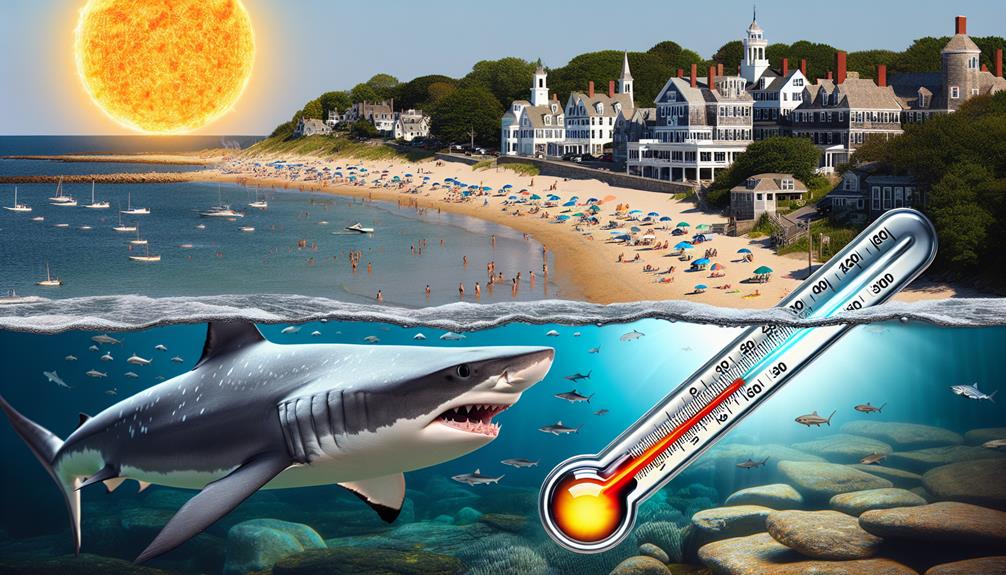
Amidst the ripple effects of climate change, a noticeable shift in shark populations around Newport, Rhode Island is occurring, undeniably linked to the changing ocean temperatures. This is a clear illustration of the climate repercussions we're facing.
These oceanic temperature shifts affect sharks in several ways:
- Altering their migration patterns
- Changing their breeding cycles
- Impinging on their food availability
- Influencing their growth rates
- Affecting their overall survival rates
It's imperative to understand that these shifts aren't isolated events. They're part of a larger, interconnected system. As the ocean warms, ecosystems are disrupted, and species like sharks that sit atop the food chain feel these effects profoundly. You're witnessing the interplay of climate change and marine life first hand.
Shark Safety: Fact Vs Fiction

You've likely heard tales of shark attacks that might make you think twice about entering the water. However, it's critical to distinguish fact from fiction when it comes to understanding shark behavior and the potential risks involved.
Let's scrutinize common myths, analyze the true nature of these magnificent creatures, and learn about effective safety measures you can take when sharing the ocean with sharks.
Debunking Shark Attack Myths
Despite popular belief, not all shark encounters result in attacks; in fact, most sharks are harmless to humans and pose no significant threat. Media influence and shark symbolism have played key roles in perpetuating misconceptions.
To clarify, consider these facts:
- Sharks don't seek out humans for food. They primarily feed on smaller sea creatures.
- More people die from falling coconuts than from shark attacks.
- Sharks don't have a vendetta against humans. If they attack, it's usually out of curiosity or mistaken identity.
- Not all species are dangerous. Of the 500+ species, only about 30 have been involved in human attacks.
- Shark nets aren't foolproof. They often harm more sharks and other marine life than they protect.
Understanding Shark Behavior
In order to safely coexist with sharks, it's crucial that you understand their behavioral patterns, distinguishing fact from fiction. Shark communication is a nuanced system, often misunderstood due to predatory instincts. Each species communicates differently, often through body language or electrical signals.
Let's decode these patterns:
| Behavior | Interpretation |
|---|---|
| Rapid swimming | Hunting mode |
| Slow, deliberate movements | Non-threatening |
Understanding these signs can help debunk common misconceptions and foster a safe coexistence. Knowledge of these patterns can dispel fears, promoting a respectful and informed approach to these magnificent creatures. Remember, sharks aren't mindless killers – they're complex, intelligent creatures with behaviors that, once understood, can lead to a harmonious coexistence.
Effective Shark Safety Measures
Armed with a solid understanding of shark behavior, we can now debunk some common myths and misconceptions while highlighting effective safety measures to ensure a peaceful coexistence with these marine creatures.
The following tactics can be instrumental:
- Participating in shark tagging programs to track their movement patterns
- Enhancements to beach patrols for increased surveillance
- Public education on recognizing shark behavior
- Investing in shark deterrent technologies
- Strictly adhering to regulations against discarding fish waste near swimming zones
These methods aren't just based on hearsay; they're backed by rigorous scientific research and real-world testing.
Impact on Newport's Tourism

While you might think that the presence of sharks in Newport could deter tourists, it's actually becoming a surprising draw for many, leading to an unexpected boost in local tourism.
The tourism benefits are clear: more visitors equate to more revenue. In fact, the economic implications are significant: higher occupancy rates in hotels, increased spending in local businesses, and an uptick in employment opportunities.
Yet, it's not only about the figures. The shark phenomena is reinventing Newport's image, transforming it from a traditional seaside town to a unique marine wildlife destination. This shift is attracting a new type of tourist – those seeking an adventurous, educational experience.
Future Predictions for Shark Populations
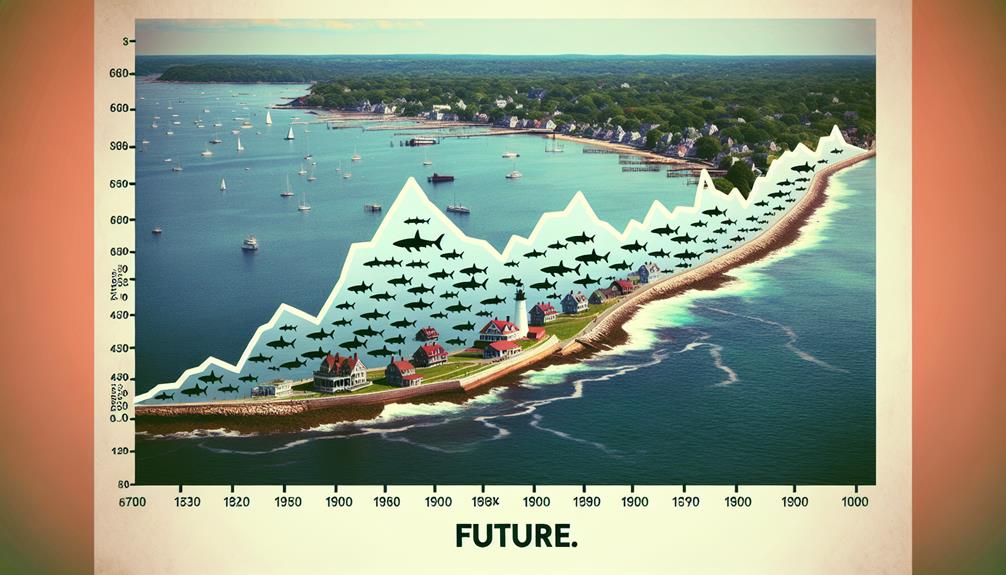
Given the current trends, you might wonder what the future holds for Newport's shark populations. With the ongoing shark conservation efforts and a focus on oceanic ecosystem balance, here are some predictions:
- Increase in Shark Numbers: Enhanced protections could lead to a growth in shark populations.
- Shift in Species Distribution: Changes in ocean temperatures might alter the species composition in Newport's waters.
- Improved Public Perception: As conservation awareness spreads, the fear of sharks could diminish.
- Greater Ecosystem Stability: Increased shark numbers could lead to a more balanced, robust marine ecosystem.
- More Research Opportunities: The increased presence of sharks could provide more opportunities for scientific study.
Conclusion
So, you've journeyed through the shark-infested waters of Newport, debunked myths, and discovered the impact of climate change.
We've separated fact from fiction on shark safety and explored its influence on tourism.
As our oceans continue to warm, we might expect to see more sharks, but let's remember, they're vital for a balanced ecosystem.
So, let's embrace our finned friends, not fear them.
After all, understanding is the first step to coexistence.